
The Weaver Stance is a popular and influential shooting technique named after Jack Weaver, a deputy sheriff from Los Angeles County, who developed the stance in the late 1950s. The stance gained prominence due to its adoption by law enforcement and competitive shooters for its stability and accuracy.
History
Jack Weaver devised the stance while participating in shooting competitions organized by Jeff Cooper, a prominent figure in the field of firearms training. The competitions focused on practical pistol shooting, emphasizing real-world shooting scenarios over traditional marksmanship. Weaver’s innovative approach emerged as a response to the limitations he observed in the traditional one-handed shooting techniques prevalent at the time.
Weaver’s stance quickly proved its effectiveness in the competitions, helping him achieve consistent victories. Jeff Cooper, recognizing its potential, began advocating for the Weaver Stance in his teachings and writings, leading to its widespread adoption. Cooper’s endorsement was instrumental in popularizing the stance among law enforcement and military personnel, eventually becoming a standard technique in these circles.
Key Elements of the Weaver Stance
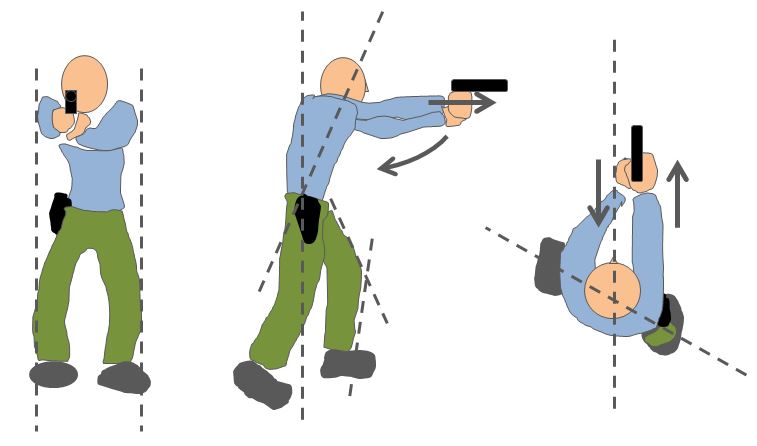
Foot Positioning:
The shooter stands with the feet shoulder-width apart. The dominant-side foot (the same side as the shooting hand) is placed slightly to the rear, forming a stable, staggered stance. This positioning helps distribute the shooter’s weight evenly and enhances balance.
Knees and Hips:
The knees are slightly bent, and the hips are squared off towards the target. This slight flexing allows for better absorption of recoil and maintains stability during rapid firing.
Upper Body Posture:
The torso leans forward slightly from the hips, creating a forward-leaning posture. This helps manage recoil by directing the force downwards rather than back into the shooter.
Grip and Arm Position:
The shooter uses a two-handed grip on the firearm. The dominant hand grips the gun as usual, while the support hand wraps around the dominant hand, providing additional stability. The arms are bent at the elbows, with the dominant arm pushed forward and the support arm bent downward. This forms an isosceles triangle with the shoulders and hands, contributing to the stance’s steadiness.
Sight Alignment:
The shooter’s focus is on aligning the sights with the target, maintaining a clear sight picture. The head is kept upright, and the eyes are level with the sights.
Advantages
The Weaver Stance offers several advantages over traditional one-handed techniques:
- Recoil Management: The staggered foot position and bent knees help absorb and control recoil, allowing for quicker follow-up shots.
- Stability: The two-handed grip and forward-leaning posture enhance overall stability and accuracy.
- Adaptability: The stance can be easily adapted to different shooting scenarios, making it versatile for both combat and competitive shooting.
Influence and Legacy
The Weaver Stance revolutionized handgun shooting techniques and remains influential today. It laid the groundwork for modern shooting stances and training methods. While some shooters prefer the Isosceles Stance, which features both arms extended equally, the Weaver Stance’s principles continue to inform contemporary shooting practices.
In summary, the Weaver Stance, developed by Jack Weaver in the late 1950s, brought significant advancements in shooting stability and accuracy. Its emphasis on a two-handed grip, proper foot positioning, and recoil management transformed handgun shooting techniques, leaving a lasting impact on law enforcement, military training, and competitive shooting.






 Battleground Archives
Leave a comment