
The Christmas Truce is one of the most remarkable moments in modern military history, symbolizing a brief pause in the brutal warfare of World War I. Occurring along the Western Front, primarily in areas where British, French, and German troops faced each other in the trenches, the truce was an unofficial, spontaneous ceasefire during the first Christmas of the war.
By late 1914, World War I had descended into a deadly stalemate. The war, initially expected to be over by Christmas, had instead settled into trench warfare, with soldiers from both sides enduring horrific conditions, cold weather, and constant shelling. The front lines stretched across France and Belgium, with soldiers living in trenches separated by the deadly no man’s land. Morale was low as soldiers on both sides faced the grim reality that the war could drag on indefinitely.
The Truce Begins
On Chrstmas Eve 1914, something extraordinary began to happen. In various locations along the Western Front, German and British soldiers began to sing Christmas carols from their respective trenches. Hearing each other, they started to respond, singing together across the battlefield. In some areas, German soldiers were seen decorating their trenches with candles and makeshift Christmas trees.
Eventually, soldiers from both sides cautiously ventured into no man’s land, calling for an unofficial truce. They greeted each other, exchanged small gifts like cigarettes, food and souvenirs, and in some instances, even played impromptu games of football. Although the stories of football matches are sometimes debated, they represent the spirit of the truce—humanity breaking through the violence for a brief moment. In some sectors, the ceasefire lasted only through Christmas Day, while in others, it extended to New Year’s Eve.
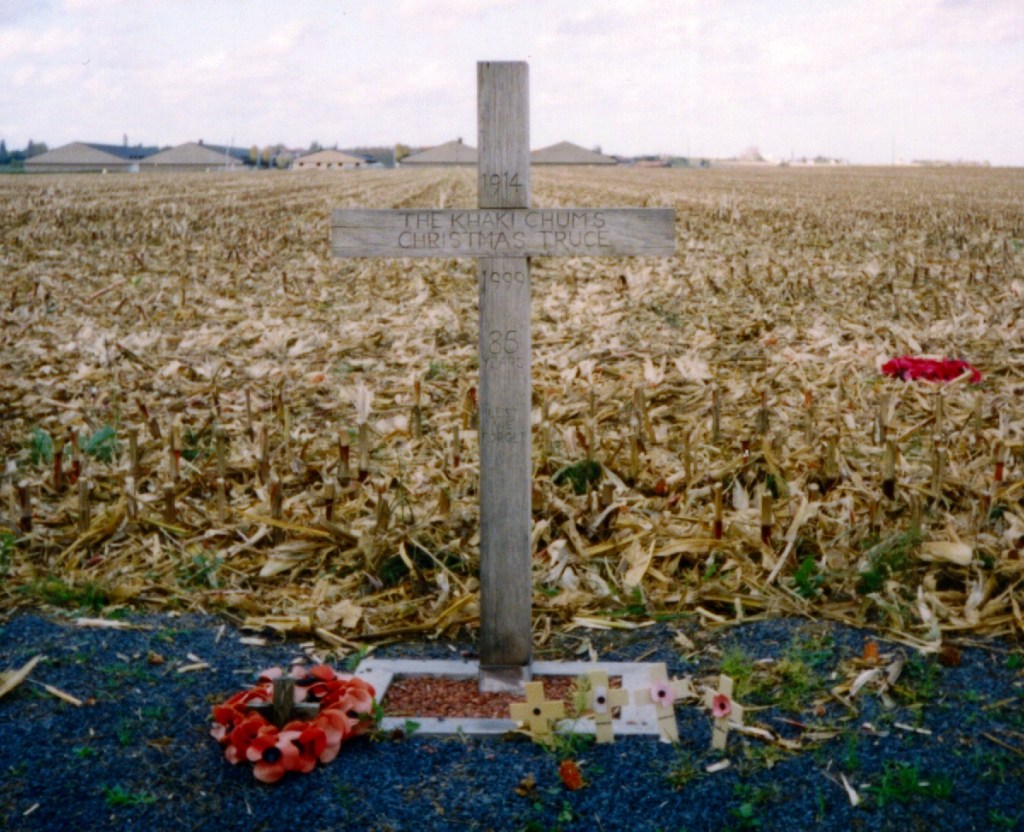
Widespread but Varied
The truce was not uniform across the front; in some areas, fighting continued, and not all commanders approved of the fraternization. However, the fact that it happened at all, especially in the midst of one of the bloodiest wars in history, is what makes the Christmas Truce so striking. Many accounts from soldiers at the time reveal a shared sense of relief and humanity. The soldiers realized they were not so different from one another, despite the propaganda that painted the enemy as evil.
Higher command on both sides quickly disapproved of the truce, fearing that such behavior could undermine the war effort. In the following years of the war, stricter measures were put in place to prevent any similar occurrences. By 1915, the war had become far more mechanized and brutal, with the introduction of poison gas and massive artillery barrages, making any hope of future truces impossible.
The Christmas Truce remains a poignant reminder of the capacity for peace and goodwill, even in the darkest of times. It is remembered today as a symbol of shared humanity, transcending the violence of war. The truce shows that even amidst conflict, moments of compassion and understanding can still occur, offering a brief glimpse of hope in an otherwise devastating war.



 Battleground Archives

Leave a comment