
Mata Hari, born Margaretha Geertruida Zelle on August 7, 1876, in Leeuwarden, Netherlands, is one of history’s most enigmatic and controversial figures. Known for her exotic dancing and alleged espionage during World War I, Mata Hari’s life story is a blend of glamour, intrigue, and tragedy.
Margaretha Zelle’s early life was marked by both privilege and hardship. She was the daughter of a prosperous hatter and enjoyed a comfortable childhood until her father went bankrupt and her mother died when she was 15. Her family’s misfortunes and a failed marriage to a Dutch colonial army officer, Rudolf MacLeod, led her to reinvent herself. The marriage was troubled, marred by infidelity and the tragic death of their son, Norman, which ended in divorce in 1906.
In search of a new beginning, Margaretha moved to Paris and adopted the stage name Mata Hari, which means “Eye of the Day” in Malay. She began performing as an exotic dancer, quickly gaining fame for her provocative performances and alluring persona. Mata Hari capitalized on the fascination with the East and positioned herself as a Javanese princess, although she had never been to Java. Her dances, often performed nearly nude, were a sensation, and she became a courtesan to many influential men across Europe, including high-ranking military officers.
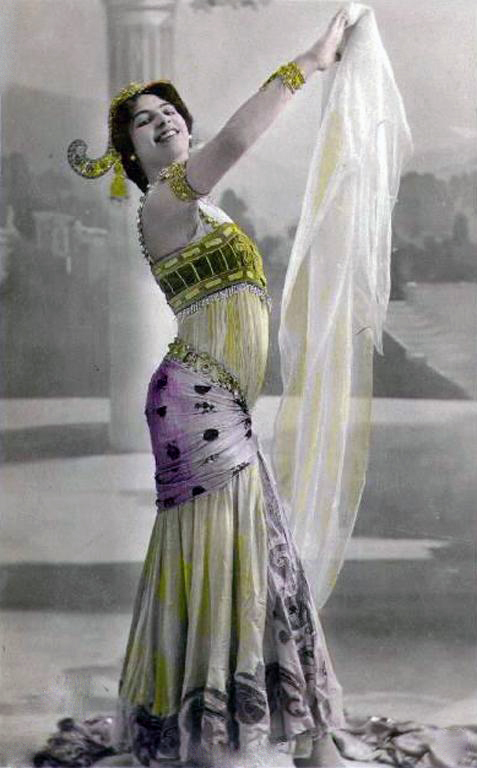
As Europe descended into World War I, Mata Hari’s movements and associations came under scrutiny. She traveled frequently between countries, which aroused suspicion. In 1916, she was approached by French intelligence and offered money to spy for France. Simultaneously, the German military intelligence service, Abwehr, allegedly recruited her as a spy, assigning her the code name H21.
Mata Hari’s effectiveness and loyalties as a spy remain debated. Some historians argue she was a double agent, while others believe she was a scapegoat for the French military’s failures. Her espionage activities were likely overstated, and her importance exaggerated by both the French and Germans. By 1917, the war had created a climate of paranoia, and France, suffering from military setbacks, sought to boost morale by demonstrating its efforts to root out espionage.
In February 1917, Mata Hari was arrested by the French authorities. During her trial, the evidence presented was largely circumstantial, and her promiscuity and exotic persona were used to portray her as a dangerous seductress and traitor. Despite a lack of concrete proof, she was convicted of espionage and sentenced to death. On October 15, 1917, Mata Hari was executed by a firing squad.
Mata Hari’s legacy is complex. She has been depicted as both a femme fatale and a martyr, a person who challenged societal norms and paid the ultimate price. Her story has inspired numerous books, films, and works of art, solidifying her place in popular culture. The mystery surrounding her true role in espionage and the dramatic elements of her life continue to captivate the imagination, making Mata Hari a symbol of intrigue and tragedy in the annals of history.






 Battleground Archives
Leave a comment