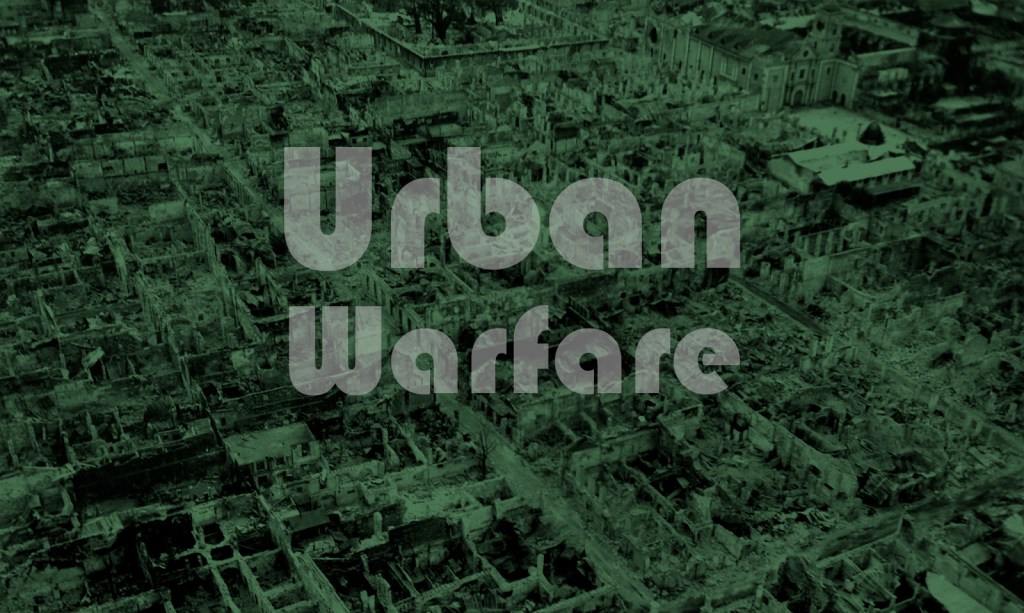
One of the most renowned Close Quarter Combat (CQC) battles in modern history (at least from an Anglo-American perspective) is the Battle of Mogadishu, also known as the Black Hawk Down incident. This battle occurred on October 3-4, 1993, in Mogadishu, Somalia, and involved U.S. military forces and Somali militia fighters. The battle is particularly famous not just for the intense urban combat that took place but also for the lessons it taught military strategists about urban warfare, CQC, and the complexities of intervention in foreign conflicts.
The U.S. involvement in Somalia began in 1992, with Operation Restore Hope, a U.N.-sanctioned mission to alleviate famine by ensuring the safe distribution of food to civilians caught in the country’s civil war. By 1993, the mission had shifted towards more direct military engagement with Somali warlords who were intercepting humanitarian aid, particularly Mohamed Farrah Aidid, who was seen as the primary obstacle to peace.
Mohamed Farrah Aidid was a Somali military officer and diplomat, who served in various roles under the regime of President Siad Barre before becoming a leading figure in the Somali Civil War. Born in 1934 in Beledweyne, Somalia, Aidid received military training in Italy and the Soviet Union. After Barre's overthrow in 1991, Aidid emerged as a powerful warlord, leading the United Somali Congress (USC) and later the Somali National Alliance (SNA), playing a central role in the ensuing conflict and resistance against international interventions.
On October 3, Task Force Ranger, a U.S. Special Operations force composed of Army Rangers, Delta Force operators, and Navy SEALs, launched a mission to capture two of Aidid’s top lieutenants in the heart of Mogadishu. The operation was expected to be a quick in-and-out, lasting no more than an hour. However, it escalated into a protracted and brutal urban battle.
The initial phase of the mission was successful, with the targeted individuals being quickly captured. The situation deteriorated when Somali militiamen shot down two UH-60 Black Hawk helicopters with rocket-propelled grenades (RPGs). The crashes of these helicopters turned what was a mission of arrest into a rescue operation, significantly complicating the U.S. forces’ objectives.
The downing of the first Black Hawk marked the beginning of intense, close-quarter battles as U.S. forces moved to secure the crash sites in a city teeming with hostile fighters. The narrow streets, closely packed buildings, and civilian population of Mogadishu created a complex battlefield that severely challenged the American troops, who faced not only armed combatants but also a maze of urban terrain that favored the defenders.
The UH-60 Black Hawk helicopters are named after Black Hawk, a notable Native American leader of the Sauk tribe, reflecting the U.S. Army's tradition of naming helicopters after Native American tribes and figures. This practice honors the bravery, leadership, and resilience associated with such historical figures. The name Black Hawk evokes qualities of strength and adaptability, which are essential attributes for the versatile military helicopter.
U.S. forces found themselves in prolonged firefights, defending the crash sites and fighting through ambushes as they attempted to reach their fallen comrades. The Somali militias, familiar with the urban landscape, utilized guerrilla tactics, moving through buildings and alleyways, and blending in with the civilian population to launch surprise attacks.
Throughout the night and into the next day, the battle raged. American forces, outnumbered and fighting in hostile territory, displayed skill in CQC, defending their positions and the crash sites against waves of attackers. The intensity of the combat and the proximity to the enemy in such confined spaces exemplified the challenges of urban warfare and CQC, where every corner and every doorway could conceal a threat.
The rescue of the trapped U.S. soldiers required a combined convoy of U.S. and U.N. forces, which fought its way through the city under heavy fire, demonstrating the difficulties of coordinating a withdrawal under such conditions. The battle resulted in the deaths of 18 U.S. soldiers, with another 73 wounded. Somali casualties were much higher, with estimates ranging from hundreds to over a thousand.
The Battle of Mogadishu had a profound impact on U.S. military policy and tactics, particularly regarding urban warfare, the risks of intervention in foreign conflicts, and the importance of understanding the cultural and political complexities of the operational environment. It also highlighted the courage, resilience, and proficiency of U.S. forces in the face of overwhelming odds and the unpredictable nature of CQC in urban settings. The battle, its participants, and its lessons continue to be studied in military academies around the world as a seminal event in the history of modern warfare.





 Battleground Archives
Leave a comment