
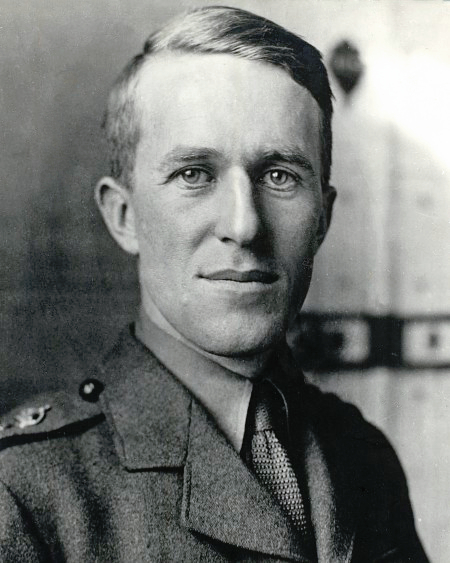
An intriguing character during World War I was T.E. Lawrence, also known as Lawrence of Arabia. Lawrence was a British archaeologist, and military officer who played a key role in the Arab Revolt against the Ottoman Empire during the war. He became famous for his daring guerrilla tactics and leadership of Arab forces in campaigns against the Ottomans in the Arabian Peninsula. Lawrence’s efforts helped to undermine Ottoman control and contributed to the eventual Allied victory in the Middle East. After the war, he became an influential figure in the post-war negotiations and advocated for Arab independence, although his disillusionment with the outcome of the war and its aftermath led to his withdrawal from public life. Lawrence’s exploits were immortalized in his autobiography, Seven Pillars of Wisdom, and in the epic film Lawrence of Arabia.

Early Life
Thomas Edward Lawrence was born on August 16, 1888, in Tremadog, Wales, United Kingdom. He was the second of five sons born to Sir Thomas Chapman, an Anglo-Irish nobleman, and Sarah Junner, who was the governess for Sir Thomas’s daughters from his previous marriage.
Lawrence spent his early years in Oxfordshire, England, where his family moved shortly after his birth. He developed a keen interest in archaeology and history from a young age, exploring the countryside and studying ancient ruins near his home.
In 1896, Lawrence’s father inherited the title of Baronet and the family’s financial situation improved significantly. Lawrence attended several schools, including the City of Oxford High School for Boys, where he excelled academically and developed a passion for literature and poetry.
In 1907, Lawrence won a scholarship to study history at Jesus College, Oxford. During his time at Oxford, he developed a deep interest in Middle Eastern history and culture, inspired by his studies of Crusader castles and his interactions with archaeologists working in the region.
In 1909, Lawrence embarked on a journey to the Levant (the eastern Mediterranean region), where he traveled extensively and immersed himself in the culture and language of the Arab world. He developed a strong affinity for the Arab people and their struggle for independence from Ottoman rule.
Lawrence’s early life was marked by a thirst for knowledge, adventure, and a deep appreciation for the cultures and peoples of the Middle East. These formative experiences laid the foundation for his later exploits and his enduring legacy as one of the most enigmatic and influential figures of the 20th century.
Early Assignments
At the outbreak of World War I, Lawrence was working as an archaeologist in the Middle East. Due to his knowledge of the region and fluency in Arabic, he was recruited by British military intelligence’s Arab Bureau Intelligence unit.
One of his first major assignment was as a liaison and advisor to Faisal, the son of Sharif Hussein bin Ali, the leader of the Arab Revolt against Ottoman rule. Lawrence’s task was to assist in coordinating Arab forces and to encourage them to rise up against their Ottoman overlords.
Sharif Hussein bin Ali
Sharif Hussein bin Ali was a prominent Arab leader and the Sharif and Emir of Mecca from 1908 until 1924. He belonged to the Hashemite family, which claimed descent from the Prophet Muhammad. Sharif Hussein played a significant role in the Arab Revolt against Ottoman rule during World War I.
Hussein became the Sharif and Emir of Mecca in 1908, succeeding his brother as the ruler of the Hejaz region in present-day Saudi Arabia. He was a proponent of Arab nationalism and sought to unite the Arab peoples under his leadership. He envisioned a unified Arab state stretching from the Arabian Peninsula to the Levant and beyond.
Sharif originally means noble or honorable and is historically used to denote a person who is a descendant of the Prophet Muhammad through his grandson Hasan, son of Ali and Fatimah. The descendants of Muhammad, especially through Hasan, are given the honorific titles sharif or sayyid to signify their lineage.
During World War I, Hussein entered into negotiations with the British government, led by Sir Henry McMahon, regarding support for an Arab uprising against the Ottoman Empire, which was allied with Germany. The correspondence between Hussein and McMahon included assurances of British support for Arab independence in exchange for Arab assistance in the war against the Ottomans.
In June 1916, Hussein’s sons, including Abdullah and Faisal, led the Arab Revolt against Ottoman rule with the support of Lawrence. The revolt aimed to secure Arab independence and control of the Arabian Peninsula.
Despite promises of Arab independence, the post-war settlement, including the Sykes-Picot Agreement and the Balfour Declaration, led to the partitioning of the Middle East and the establishment of British and French mandates. In 1924, Hussein abdicated his title as Sharif of Mecca in favor of his eldest son, Ali bin Hussein. However, conflicts within the family and pressure from the Saudi forces led to Hussein’s exile in 1924. Sharif Hussein is remembered as a symbol of Arab nationalism and resistance against foreign rule. His descendants, particularly his sons Faisal and Abdullah, went on to play significant roles in the politics of the Middle East, with Faisal becoming the first King of Iraq and Abdullah becoming the first King of Jordan.
The Balfour Declaration was a public statement issued by the British government in 1917, expressing support for the establishment of a national home for the Jewish people in Palestine. Authored by Arthur James Balfour, the UK's Foreign Secretary, it was addressed to Lord Rothschild, a leader of the British Jewish community, for transmission to the Zionist Federation of Great Britain and Ireland.
Arab Revolt
Lawrence became deeply involved in the Arab Revolt, employing guerrilla tactics to harass and undermine Ottoman forces. He led daring raids on Ottoman supply lines, sabotaged railway tracks and bridges, and conducted reconnaissance missions behind enemy lines.
One of Lawrence’s most significant achievements was the capture of the strategic port city of Aqaba in July 1917. This victory, achieved with a small force of Arab irregulars, dealt a severe blow to Ottoman control of the region and opened up new possibilities for the Arab Revolt.
Lawrence also played a role in the prolonged siege of Medina, where Ottoman forces were entrenched. Despite his efforts to rally Arab forces for an assault on the city, the siege dragged on for months and was ultimately unsuccessful.
Diplomacy
Throughout the Arab Revolt, Lawrence served as a diplomat and intermediary between Arab leaders, British officials, and other Allied powers. He worked to secure support for the Arab cause and to navigate the complex politics of the region.
Lawrence became disillusioned with British and French imperial ambitions in the Middle East, particularly after the revelation of the secret Sykes-Picot Agreement, which outlined the division of the region into British and French spheres of influence.
The Sykes-Picot Agreement was a secret 1916 treaty between Britain and France, outlining their respective control over the Middle East following the expected fall of the Ottoman Empire. It allocated regions such as modern-day Syria, Lebanon, Iraq, and Jordan to either French or British influence.
Post-War
After the war, Lawrence achieved international fame for his role in the Arab Revolt and his writings on the subject. However, he struggled with the contradictions of his wartime experiences and ultimately sought anonymity under various pseudonyms.
Lawrence died in a motorcycle accident in 1935, at the age of 46. His life and exploits continue to capture the imagination of historians, writers, and filmmakers, making him one of the most iconic figures of the 20th century.





 Battleground Archives
Leave a comment