
Assault teams play a pivotal role in Close Quarter Combat (CQC), employing a variety of techniques designed to quickly neutralize threats, secure objectives, and minimize casualties among both operatives and non-combatants. The techniques they employ are multifaceted, combining elements of stealth, speed, precision, and coordination.
Immediate Action Drills
These are rehearsed maneuvers that enable the team to swiftly enter and dominate a room. Techniques such as Slicing the Pie (gradually clearing angles of a room from outside before entry) and buttonhook maneuvers are used to gain situational awareness while minimizing exposure to potential threats.
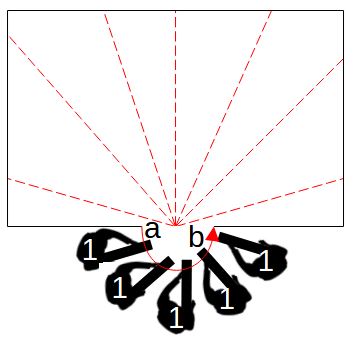
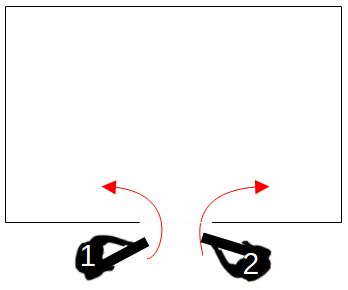
Dynamic Entry
This technique involves forcefully entering a room to overwhelm the occupants with speed and surprise. This is often used in conjunction with explosive breaching to disorient the enemy.
Stealth Entry
When the situation calls for it, teams may use a more cautious approach to maintain the element of surprise for as long as possible. This might involve silent breaching techniques and quiet movement within the building.
Use of Cover and Concealment
Assault team members are trained to identify and use cover effectively within an environment, protecting themselves from enemy fire while maintaining the ability to engage threats. Concealement is used to hide a teams approach and movement, even when cover is not available, using darkness, smoke, or environmental features to reduce visibility.
Flashbangs and Non-Lethal Munitions
Stun Grenades (Flashbangs) can be sed to disorient enemies before room entry, flashbangs temporarily impair vision and hearing, giving assault teams a critical advantage. Non-lethal chemical agents or smoke can be used to flush out enemies, obscure vision, or signal positions and movements.
Close Quarters Marksmanship
Operatives are trained to accurately engage targets at close range, often in confined spaces where the margin for error is minimal. This requires a high degree of weapon control, quick target acquisition, and the ability to shoot accurately under stress.
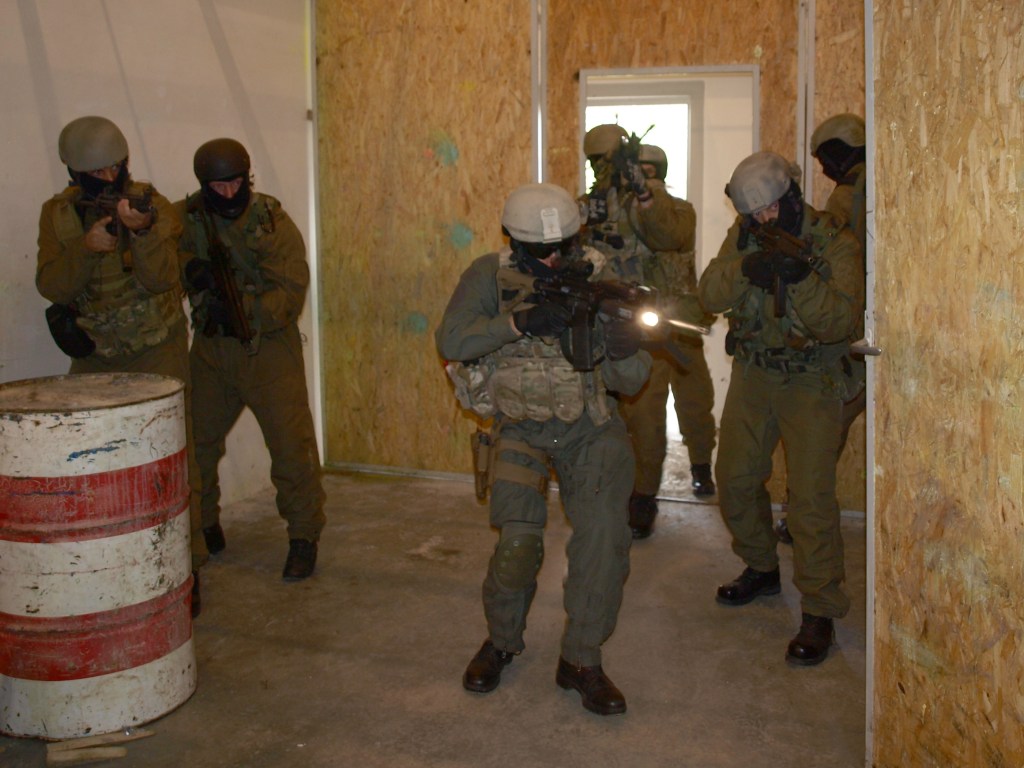
Training for CQC includes the ability to quickly transition between primary and secondary weapons in case of a malfunction or when a different level of force is appropriate.
Hand-to-Hand Combat
In extreme close quarters, or when silence is paramount, members may need to rely on hand-to-hand combat skills to neutralize threats without alerting others.
Coordination and Communication
Teams often use hand signals or other non-verbal cues to communicate stealthily within environments where noise discipline is crucial. Assault teams coordinate closely with breaching teams, ensuring that the transition from breaching to room-clearing is seamless and rapid.
Hostage Rescue and Non-Combatant Evacuation
Techniques specific to the safe extraction of hostages or non-combatants from a hostile environment, including the use of shields, cover formations, and non-lethal suppressive measures.
Situational Awareness and Decision Making
Operatives are trained to constantly assess their environment, threats, and the status of their team, making split-second decisions based on changing conditions.
These techniques are not static and are adapted to the mission’s needs, the environment, and the threat level. Regular and intensive training is essential for assault teams to maintain their proficiency and adaptability in the diverse scenarios encountered in Close Quarter Combat.





 Battleground Archives

Leave a comment